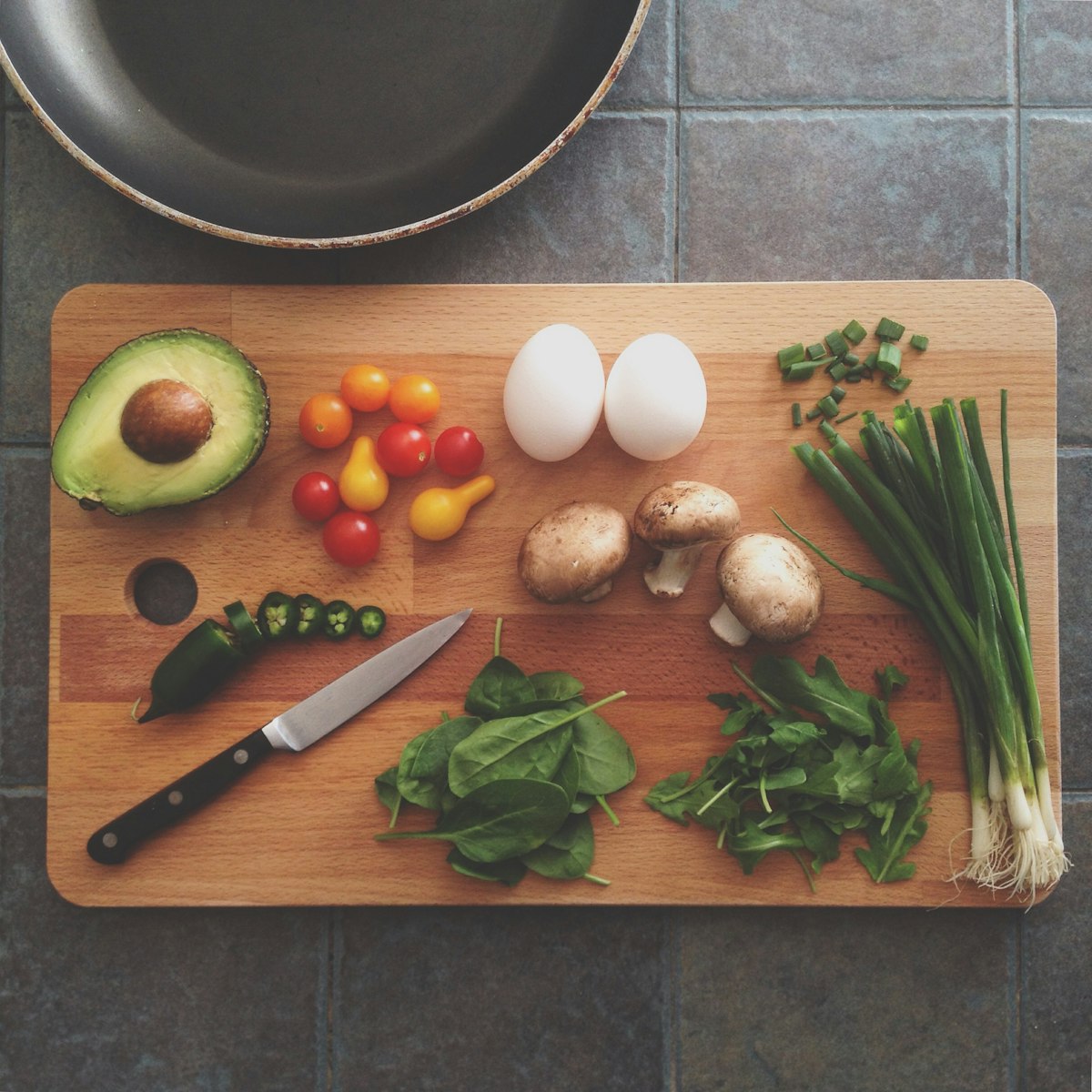
Photo by Jeff Sheldon on Unsplash
Reading time: 11 minutes
Best Knife for Cutting Vegetables, The Right Blade for Every Veggie
Finding the best knife for cutting vegetables makes the difference between enjoying your prep and dreading it. The right vegetable knife turns a pile of produce into perfectly even cuts in half the time with half the effort. Whether you are dicing onions, julienning carrots, or breaking down a butternut squash, the best knife for cutting vegetables matches the task to the blade type.
This guide covers every vegetable cutting scenario and the knife that handles it best.
Key Takeaways
- The nakiri is the dedicated Japanese vegetable knife, flat profile, thin blade, effortless push-cutting
- A santoku is the best all-rounder for home cooks who want one knife for vegetables and more
- A gyuto handles vegetables well while also excelling at proteins and herbs
- Blade geometry matters more than size, thin, hard blades cut vegetables cleanest
- The right cutting technique paired with the right knife eliminates vegetable prep frustration
Table of Contents
Why the Right Vegetable Knife Matters The Nakiri: Japan's Dedicated Vegetable Knife The Santoku: The Versatile Vegetable Master The Gyuto: Vegetables Plus Everything Else The Usuba: Professional Vegetable Artistry Matching Vegetables to Knives Vegetable Cutting Techniques That Matter Blade Features for Better Vegetable Cutting Our Recommendation Frequently Asked QuestionsWhy the Right Vegetable Knife Matters
Vegetables make up the majority of cutting work in most kitchens. Whether you are preparing a stir-fry, building a salad, or making soup, vegetables dominate your prep time. Using the wrong knife creates problems:
- Crushed cells. A dull or thick blade crushes vegetable cells instead of cutting them cleanly. This releases excess moisture, turns herbs brown, and makes onions produce more tear-inducing compounds
- Uneven cuts. Thick blades wedge through vegetables, pushing them aside rather than cutting through. This creates uneven pieces that cook at different rates
- Wasted effort. A knife that does not match the task requires more force, more time, and more frustration
Japanese knives solve these problems with thinner blades, harder steel, and sharper edges than Western alternatives. The difference is immediately noticeable the first time you slice a tomato with a quality Japanese knife.
The Nakiri: Japan's Dedicated Vegetable Knife
The nakiri knife is designed exclusively for vegetables. Its defining features make it the best knife for cutting vegetables when your primary task is produce prep.
Key Features
- Flat blade profile. The entire edge contacts the cutting board simultaneously. This means every piece is cut cleanly in a single push-cut, with no uncut bits still attached at the bottom
- Double bevel edge. Sharpened on both sides for straight, unbiased cuts. Unlike single-bevel knives, a nakiri cuts straight down without steering left or right
- Thin blade. The blade is typically 1.5-2mm thick at the spine, creating minimal resistance through vegetables
- Wide blade face. Acts as a scoop to transfer cut vegetables from board to pan
- Squared-off tip. Not designed for tip work, which reinforces that this is a specialist tool
What the Nakiri Does Best
- Dicing onions, peppers, and tomatoes with clean, even cuts
- Shredding cabbage into fine, uniform strips
- Creating paper-thin slices of radishes, cucumbers, and eggplant
- Push-cutting through leafy greens without bruising
- Precision vegetable work where consistency matters
For a comprehensive comparison with Western alternatives, see our nakiri vs western vegetable knife guide. And our best nakiri knife 2026 reviews the current top options.
The Santoku: The Versatile Vegetable Master
The santoku knife guide means "three virtues", slicing, dicing, and mincing. It handles vegetables excellently while also being competent with proteins and herbs. If you want one knife that does vegetables 90% as well as a nakiri while also handling everything else, the santoku is your answer.
Key Features for Vegetable Work
- Flatter profile than a gyuto. More blade contacts the board, improving push-cut efficiency
- Shorter length (165-180mm). More maneuverable than a longer chef's knife. Perfect for medium-sized cutting boards
- Wide blade. Good knuckle clearance and scooping ability
- Light weight. Less fatigue during extended vegetable prep sessions
Vegetable Tasks the Santoku Excels At
- All-purpose vegetable dicing and slicing
- julienne with santoku cuts for matchstick vegetables
- Fine mincing of garlic, ginger, and shallots
- Quick chopping of herbs. See our guide on chop herbs finely
- Transitioning seamlessly between vegetables and proteins during meal prep
The Gyuto: Vegetables Plus Everything Else
The gyuto knife guide is the Japanese chef's knife. Its curved profile makes it less specialized for vegetable push-cutting but more versatile across all kitchen tasks. If you already own a gyuto, it handles vegetables well, just with a different technique than a nakiri or santoku.
How the Gyuto Handles Vegetables
- Rocking motion. The curved belly suits the rocking mince technique for herbs and garlic
- Pull-cutting. The longer blade excels at draw cuts through large vegetables
- Versatility. Switch from vegetables to proteins to herbs without changing knives
- Longer blade. 210-240mm gives you more cutting surface for large produce like watermelon or cabbage
The Okami Classic 8" Chef Knife ($119) in the gyuto style handles vegetable work beautifully. The AUS-8 steel takes a sharp enough edge to glide through tomato skin, and the 8-inch blade provides ample length for most vegetables. For mastering the right cuts, see our guide on slicing with gyuto.
The Usuba: Professional Vegetable Artistry
The usuba is the professional Japanese vegetable knife. It is a single-bevel blade designed for the precise decorative cuts (mukimono) that define high-end Japanese cuisine.
- Single bevel. Ground on one side only for extreme precision. See our single bevel vs double bevel guide
- Requires training. Single-bevel knives steer during cutting and require specific technique
- Not for beginners. The usuba is a professional tool that takes years to master
- Paper-thin cuts. In skilled hands, an usuba creates translucent vegetable sheets
For home cooks, the nakiri delivers 95% of the usuba's vegetable-cutting capability with the ease of a double-bevel edge.
Matching Vegetables to Knives
Hard Vegetables (Carrots, Butternut Squash, Sweet Potato)
Use a gyuto or santoku. These vegetables need a knife with enough weight and blade height to push through dense flesh. The slight curve of these knives helps you work through thick produce. A nakiri can handle carrots but may feel underpowered on butternut squash.
Medium Vegetables (Onions, Peppers, Potatoes)
Any of the three works well. The nakiri excels at clean onion dices. The santoku transitions smoothly between different medium vegetables. The gyuto handles these with ease. For onion-specific technique, see our guide on dice an onion.
Soft Vegetables (Tomatoes, Mushrooms, Eggplant)
A sharp nakiri or santoku is ideal. Soft vegetables require a keen edge more than blade weight. A dull knife crushes these ingredients. The flat profile of a nakiri makes especially clean cuts through tomatoes and mushrooms.
Leafy Greens (Cabbage, Lettuce, Herbs)
The nakiri dominates here. Its flat edge and push-cut technique produce clean cuts that do not bruise delicate leaves. A sharp santoku is a close second. For practicing these cuts, see our vegetables for knife practice guide.
Long Vegetables (Cucumbers, Zucchini, Celery)
A longer gyuto blade gives you one-stroke cuts through the full length. A nakiri works for cross-cuts and diagonal cuts. The santoku handles smaller cuts on these vegetables efficiently.
Vegetable Cutting Techniques That Matter
The right knife paired with the right technique produces the best results. For foundations, see our basic Japanese knife skills guide.
Push Cut
The primary technique for nakiri and santoku. Push the blade straight down and slightly forward through the vegetable. The flat profile ensures the full edge contacts the board. No rocking. No sawing.
Pull Cut
Draw the knife through the vegetable toward you in a long, smooth stroke. Best for large, soft vegetables. The gyuto's longer blade excels here.
Rock Chop
Anchor the tip of the blade and rock the heel through the ingredient. Best for mincing herbs and garlic with a curved gyuto. Less effective with a flat nakiri.
Blade Features for Better Vegetable Cutting
- Thin blade geometry. The thinner the blade, the less resistance through vegetables. Japanese knives at 1.5-2.5mm spine thickness outperform Western knives at 2.5-3.5mm
- Hard steel. Harder steel holds a sharper edge longer. AUS-10 at 60-61 HRC (like the Okami Premium) maintains vegetable-cutting sharpness far longer than softer Western steels
- Flat or semi-flat profile. More edge-to-board contact means cleaner cuts on flat surfaces
- Granton (dimpled) edge. Hollow dimples on the blade face reduce suction on starchy vegetables like potatoes, preventing slices from sticking
- Tall blade height. Provides knuckle clearance and serves as a scoop for transferring cut vegetables
Our Recommendation
For most home cooks, we recommend one of these approaches:
- If you cook lots of vegetables: Get a nakiri as your dedicated vegetable knife alongside a gyuto for everything else. Build your set with our best knife set under $300 guide
- If you want one versatile knife: The santoku handles vegetables excellently while covering proteins and herbs. The Okami Classic 8" Chef Knife ($119) is a superb starting point that handles vegetable work with impressive precision
- If you want the best of both worlds: The Okami Premium 8" Damascus ($199) with AUS-10 steel delivers the thin geometry and edge retention that transforms vegetable prep from chore to pleasure
Frequently Asked Questions
Do I need a separate knife just for vegetables?
Not necessarily. A quality santoku or gyuto handles vegetables well alongside other tasks. However, if you prepare large quantities of vegetables regularly, a dedicated nakiri makes the work faster and more enjoyable. Think of it like having a specialized screwdriver versus a multi-tool, both work, but the dedicated tool is more efficient for its specific job.
Why do my vegetables stick to the knife blade?
Starchy vegetables create suction against flat blade surfaces. Solutions include: using a knife with a granton (dimpled) edge, choosing a knife with a hammered (tsuchime) finish that creates air pockets, or simply wiping the blade between cuts. Thinner blades create less suction than thicker ones.
What size knife is best for cutting vegetables?
For most home cooks, a 165-180mm (6.5-7 inch) blade is ideal for vegetable work. This size provides enough cutting surface for most produce while remaining maneuverable on a standard cutting board. If you frequently work with large vegetables like cabbage or watermelon, consider a 210mm (8 inch) gyuto for those specific tasks.
How do I keep my vegetable knife sharp?
Use a quality cutting board (end-grain wood or soft plastic), hand wash and dry after each use, and sharpen on a whetstone when the knife starts to drag on tomato skin. The time between sharpenings depends on your knife's steel hardness and how often you cook. Most home cooks sharpen every 2-4 months.
Can I use a nakiri for tasks other than vegetables?
A nakiri can slice boneless proteins and mince herbs, but it is not ideal for these tasks. The flat profile lacks the rocking ability needed for efficient herb mincing, and the shorter blade length limits protein slicing. The nakiri is best kept as a vegetable specialist, with a gyuto or santoku handling other tasks.


